
Guardians of the Mist: The Forgotten Irish Werewolves and the Ancient Bond Between Human and Hound

When spooky season arrives, Halloween tales usually summon up the same image of the werewolf: a cursed monster driven by bloodlust, howling at a full moon, and preying on innocent villagers.
But if you look back into ancient Irish folklore, you’ll discover a completely different kind of werewolf story... one that isn't about horror, but about loyalty, protection, and an unbreakable connection between humans and canines.
This Halloween, let’s peel back the Hollywood myths and explore the history of the Irish Werewolf... the gentlest beast in ancient mythology.
Ireland’s Wolf Country
Long before Ireland was known for its emerald hills, it was covered in dense, ancient forests. For thousands of years, humans shared this island with vast packs of wolves. Ireland was even known in old texts as Inis na Spideog and later nicknamed "Wolf Island."
Instead of viewing the wolf solely as a feared enemy, the ancient Celts held a deep reverence for the beast. They respected its intelligence, pack loyalty, and hunting prowess. Out of this deep environmental relationship grew the legend of the Wolves of Ossory (Faoladh or Luchthonn).

The Wolves of Ossory: Protectors, Not Monsters
In medieval Irish tales, most famously recorded in the 12th century by chronicler Gerald of Wales, the people of the Kingdom of Ossory possessed a unique relationship with wolves.
According to legend, an ancient curse or divine gift forced a man and a woman from the kingdom to transform into wolves every seven years. But unlike European werewolves, who were feared as mindless killers, the Irish werewolves remained human in spirit:
-
Guardians of the Weak: The Ossory wolves were known to guard lost children in the woods, guide travelers safely through dark forests, and protect cattle herds from wild predators.
-
Warriors for Kings: Irish chieftains and kings frequently allied with wolf-people, calling upon them in battles for their fierce strength and tactical instincts.
-
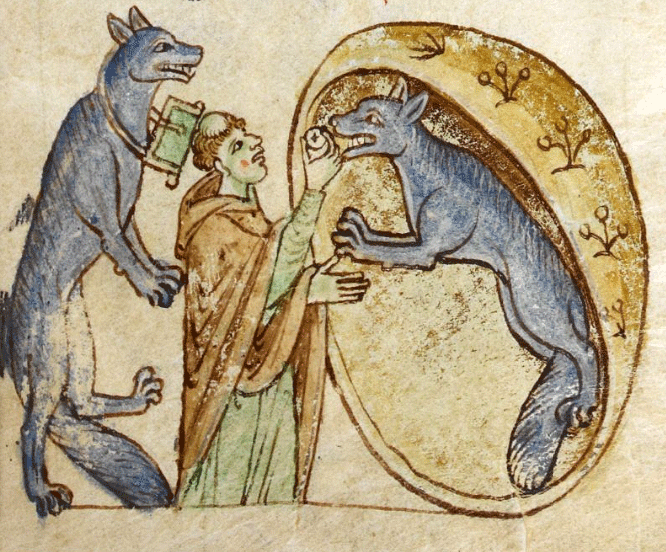
Faithful Souls: In one famous 12th-century account, a wolf approached a traveling priest to request last rites for his dying wolf-wife, unzipping her wolf skin to reveal her human form underneath to prove she possessed a devout human soul.
From Wolf to Hound: The Sacred Human-Canine Bond
The Irish werewolf tradition reflects how Celtic culture viewed the boundary between humans, wolves, and dogs as fluid. The wolf was not an alien monster; it was a wild relative.
Over centuries, as humans domesticated wolves into working hounds, this reverence transformed into Ireland’s love for the legendary Irish Wolfhound.

These massive, gentle giants were bred to defend homesteads against wild wolves, yet they were known to be incredibly gentle with children and fierce only when protecting their family. Irish warrior heroes were even named after dogs, such as Cú Chulainn (meaning "The Hound of Culann"), celebrated for his unwavering loyalty and fierce bravery.
A Different Kind of Halloween Tale
As you light your candles and watch spooky movies this Halloween, remember that the story of the werewolf wasn't always a nightmare.
In Irish lore, turning into a wolf didn't mean losing your humanity... it meant stepping up to protect the pack. It serves as a historical reminder of the deep, ancient bond between humans and dogs: a relationship built on trust, protection, and mutual survival through the dark forest nights.
Leave a comment
Comments will be approved before showing up.